The House Edge Never Needed to Chase Me: My Deluded Roulette Recovery Plan
There was a period in my trading life when a bad session on the betting exchange did not necessarily mean I was finished for the day. I had another idea. If football trading had left me in a hole, perhaps online roulette could get me out of it. I jokingly called the approach ‘Roulette Recovery’. For a while, it appeared to work. Until it didn't. The strange thing is that roulette was not hiding its advantage. The mathematics were there on the wheel, in plain sight. I was the one trying to negotiate with them.
That experience has stayed with me because it illustrates a trap that goes well beyond casinos. A run of wins can make a losing proposition feel like a discovery. A recovery can feel like proof of skill. And when money has already been lost elsewhere, the urge to get back to even can become more powerful than the question of whether the next decision makes any sense.

The tiny green pocket that changes everything
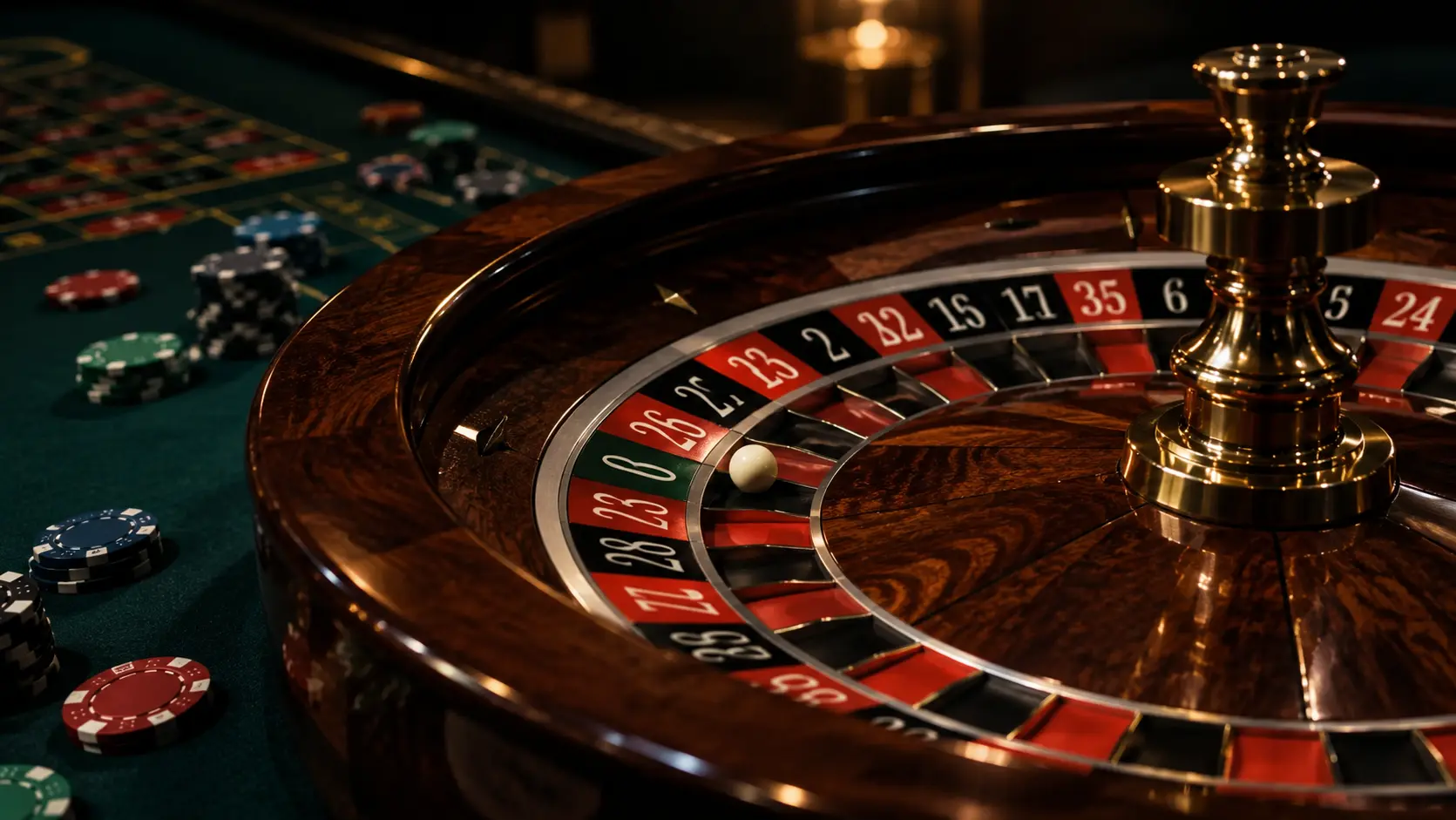
Consider standard European roulette. There are 37 equally likely numbered pockets: 18 red, 18 black and one green zero. A bet on red pays even money when it wins. It looks like a fifty-fifty decision, and on many spins it feels like one. But the actual probability of red is 18/37, approximately 48.65%. The probability of losing that red bet is 19/37, about 51.35%, because zero loses too. The difference sounds small until you calculate what it does to every pound wagered.
Put £1 on red. On 18 of the 37 possible outcomes, the net profit is £1. On the other 19, the loss is £1. The expected net result is therefore (18 × £1 − 19 × £1) / 37, or minus 2.70 pence for every pound staked. That is the house edge: approximately 2.70% on standard European roulette even-money bets, before any special rules. The casino does not need to know the next colour. It does not need to beat you on every visit. It simply offers a payout slightly worse than the true odds justify.
American roulette, with both zero and double zero, is worse for the player on ordinary even-money bets: 18 winning pockets out of 38 and a house edge of about 5.26%. Some European tables offer rules such as la partage that reduce the effective edge on even-money bets, but that is a specific rule, not a clever staking pattern. The wheel's design and the payout terms determine the underlying expectation.
Why winning five times does not prove anything
Imagine a perfectly ordinary evening when red appears three times in a row and you have backed it each time. The account balance rises. You feel the timing is right. Perhaps you stop after a small profit and call the session a success. Nothing about that sequence contradicts the 2.70% house edge. The edge is a long-run mathematical expectation across amounts wagered, not a promise that every short session will lose.
The distinction matters because a person can finish ahead on most of their short visits under certain staking and stopping patterns while still losing money overall when the occasional larger loss arrives. The win rate of sessions and the expected value of the money staked are different things. That is where the seductive idea of ‘recovery’ finds room to grow: the small wins are frequent, visible and reassuring, while the rare, painful loss can wipe out many of them.
The arithmetic of chasing a loss
A familiar roulette recovery idea is to double an even-money stake after every loss, hoping that one eventual win will recover the earlier losses and leave a small profit. I am not claiming this was the exact staking sequence I used; the lesson is in the mathematics of the idea. Start with £1 and lose six times. The stakes are £1, £2, £4, £8, £16 and £32: £63 already lost. The next stake required to pursue that original £1 profit is £64. A system advertised as a way to win one pound has suddenly demanded £127 of total exposure if the seventh bet is placed.
A six-loss sequence is not a bizarre impossibility on a European wheel. More importantly, neither the next spin nor the house edge remembers what you have lost. Doubling stakes changes the size and timing of the outcomes; it does not improve the expected return per pound wagered. A finite bank and table limits make indefinite doubling impossible. Even without those limits, staking more on a negative-expectation game increases the amount exposed to that negative expectation.
The dangerous word was ‘recover’
What made my Roulette Recovery episode particularly misguided was the reason I was there. I was not analysing roulette as a separate investment opportunity with evidence of an advantage. I was reacting to a loss in another market. The objective had shifted from making a sound decision to repairing a number on a screen. That is a very different psychological position. Once ‘back to even’ becomes the target, a decision can feel justified simply because it offers a route back to yesterday's balance.
I have written about a related illusion in I Used to Build Houses in My Head After One Good Week. A brief profitable run made it easy to extrapolate future wealth before I understood the likely drawdowns or the quality of the underlying evidence. Roulette Recovery was another version of that impulse: replacing the difficult work of measuring an edge with the comforting feeling that the next result might put everything right.
What roulette teaches us about the betting exchange
Sports betting is not roulette. Match probabilities are not fixed in the same transparent way as the 37 pockets of a wheel, and exchange prices can sometimes be wrong. But that does not mean a trader has an edge merely because the selection wins often, the price looks generous or a bot places bets efficiently. Exchange commission, market pricing, selection quality and execution all affect the result. The house edge is built into roulette's rules; in exchange betting, the challenge is to establish whether your own selections have positive expectation after costs.
That is why I now pay more attention to the path of a strategy than to its most exciting week. In How Big Should Your Betfair Trading Bank Be? Why Survival Matters More Than Profit, the central question is whether the bank can withstand the losses that are bound to occur. A recovery plan that depends on ever-larger stakes is the opposite of that discipline.
Our Research Lab has made this painfully concrete. One football collector can win more bets than it loses and still finish with a negative return because the prices are too short. Another can post an impressive month that barely offsets an earlier loss. Those are not reasons to abandon research. They are reasons to measure the entire sequence, keep the stakes proportionate and refuse to turn a temporary recovery into a claim of a proven system.
The wheel was not the problem
The most useful lesson from Roulette Recovery was not that casinos are clever and gamblers are foolish. It was that I had allowed the emotional need to erase a loss to replace the question that should have come first: what advantage, if any, do I have here? On a standard roulette wheel, the answer was written into the payout table before I placed a bet. No amount of confidence, patience, doubling or lucky timing could change it.
There is no shame in learning a lesson late, but there is a cost to refusing to learn it. Today I would rather close an unsuccessful experiment, preserve the evidence and understand what went wrong than go searching for another wheel to make the numbers look better. The most important recovery was not a roulette win. It was recovering the ability to distinguish a good decision from a result I desperately wanted.
Interested in our Research Framework? Explore how Trade Carefully tests real betting ideas, records losses and evaluates whether an apparent advantage survives scrutiny.


Comments